
The August 12 solar eclipse: lessons in technology and preparedness
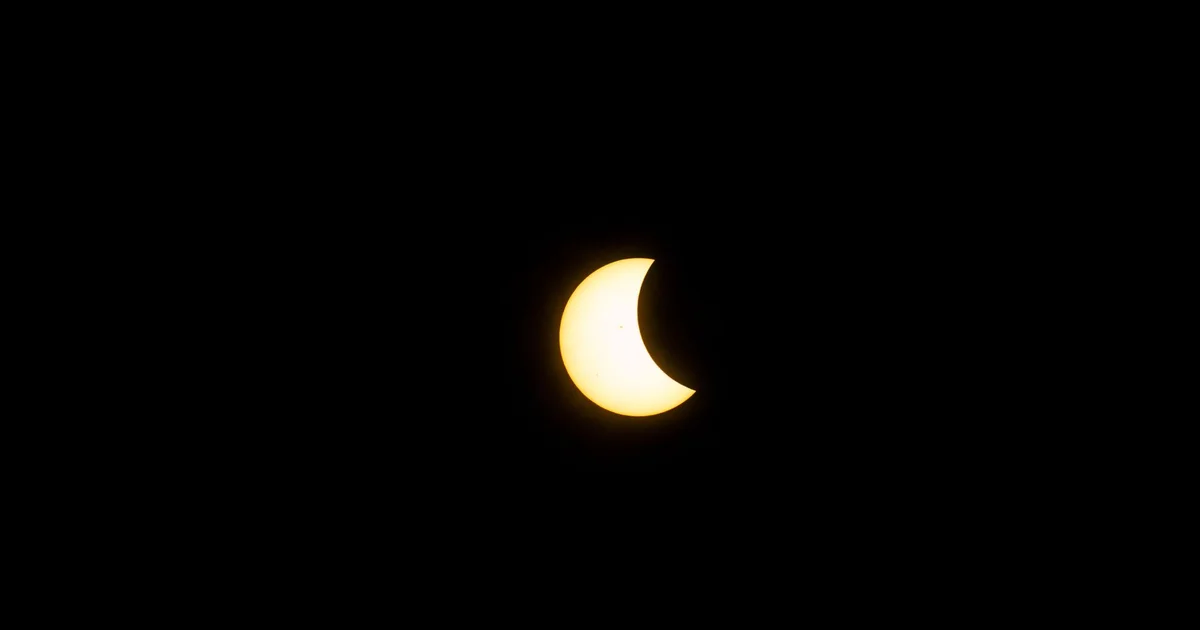
On August 12, 2026 a total solar eclipse will draw the world's attention: the Moon will pass between the Earth and the Sun and its shadow will sweep a path that begins in the far north of Siberia, crosses the Arctic and the North Atlantic, passes over Iceland and reaches northern Spain, where it will be total along a line running, among other cities, from Oviedo to Palma de Mallorca, passing through Burgos. It will not be visible in Ecuador, neither total nor partial, but there is a valuable lesson in how technology turns an astronomical phenomenon into something any company can learn from.
The technology that predicts the "unpredictable"
Eclipses are among the most reliable phenomena in astronomy: they are calculated decades ahead thanks to ephemerides, the mathematical models of the motion of the Earth, the Moon and the Sun. Spain's National Geographic Institute publishes a site dedicated to the eclipse (in Spanish) with an interactive viewer for exploring the path of totality, and NASA publishes visualizations of the shadow's route and broadcasts the event live.
For a company, the lesson is direct: what looks unpredictable almost always has a model that anticipates it. The same principles of data, simulation and monitoring that astronomers use apply today to predictive equipment maintenance, inventory management and cybersecurity.
Solar energy: when the Sun "disappears"
During a total eclipse, photovoltaic solar generation drops sharply in the shadow zone for several minutes and then recovers. Grid operators with a lot of solar generation usually prepare in advance, activating backup plants and adjusting demand.
The question applies to any Ecuadorian company with solar panels: what happens to your operation when your own generation drops? The drop does not need an eclipse: a storm, dense cloud, an inverter failure or a grid outage has the same effect. The answer is not to abandon solar energy, but to design the infrastructure with redundancy.
Seeing without harm: the value of standards
Looking at the Sun without protection can cause irreversible retinal damage; the retina has no pain receptors, so vision problems can appear later. To watch an eclipse you use glasses or filters that meet the international standard ISO 12312-2, specific to direct solar observation. Any dark lens is not the same as certified glasses. In technology this principle repeats: standards exist to protect you from risks you do not feel until it is too late. An untested backup, an unconfigured firewall or uncertified cabling appear to protect, but do not meet the standard.
What to do: prepare your operation for the foreseeable
- Identify your critical systems: servers, network, cameras, point of sale, refrigeration or production equipment. Note how long you can operate without each one.
- Calculate the real runtime of your power backups. Check the capacity of your UPS units and batteries against the current load, not the load you had when you installed them.
- Run controlled tests. Simulate an outage, with prior notice, and check that critical equipment stays up and shuts down in an orderly way.
- If you have solar panels, verify how the installation behaves when generation or the grid drops, and which loads remain backed up.
- Enable monitoring and alerts for power, temperature and equipment status, so you find out before your customers do.
- Document a contingency plan with owners, contacts and recovery order, and test it at least once a year.
- Test your data backups by restoring a real copy, not just checking that the backup "finished successfully".
Common mistakes
- Sizing a UPS once and never reviewing it as the number of devices grows.
- Assuming that having solar panels means no backup is needed.
- Keeping batteries without maintenance or scheduled replacement.
- Connecting everything to a single circuit without prioritizing what is critical.
- Never testing the contingency plan until the day of the failure.
When it makes sense and when it does not
Full redundancy, with generator, batteries and duplicate links, makes sense when an hour of downtime costs more than the investment: in-house data centers, continuous production, cold chain, healthcare or retail with online electronic invoicing. In a small office, a properly sized UPS for the network equipment and servers, plus a cloud backup, may be enough. What does not make sense is not knowing what would happen: measure first, then decide.
How we approach it at SimCodec
At SimCodec we work every day with the same approach that makes predicting an eclipse possible: data, standards and preparation. We were founded by five partners with ten years of shared experience and have EPIC as a regional strategic partner. We design backup power systems for businesses, networks and certified structured cabling, infrastructure monitoring and cloud solutions built so that operations do not stop when something changes in the environment. If your company depends on power, equipment or data, let's talk: we assess your points of failure and build the redundancy that keeps you running, eclipse or no eclipse.
Sources
- Instituto Geográfico Nacional de España, El eclipse total del 12 de agosto de 2026 (Spanish).
- NASA Scientific Visualization Studio, Total Solar Eclipse of August 12, 2026.
When does the 2026 total solar eclipse occur and will it be visible from Ecuador?
It occurs on August 12, 2026, an event that won't repeat for 150 years; the path of totality crosses Russia, Greenland, the Atlantic and Spain, but it won't be visible from Ecuador.
What happens to solar power generation during an eclipse?
Solar photovoltaic generation drops to nearly zero for several minutes across the shadow path. The recommendation for companies with solar panels is to design infrastructure with redundancy: battery backup, stable grid connection and real-time monitoring.
What standard protects your eyes when observing a solar eclipse?
Certified glasses must meet the ISO 12312-2:2015 standard, which filters 100% of UV rays, since looking at the Sun without protection can cause irreversible retinal damage.