

Fiber optic on the Front Line: Manta and Manabí connect
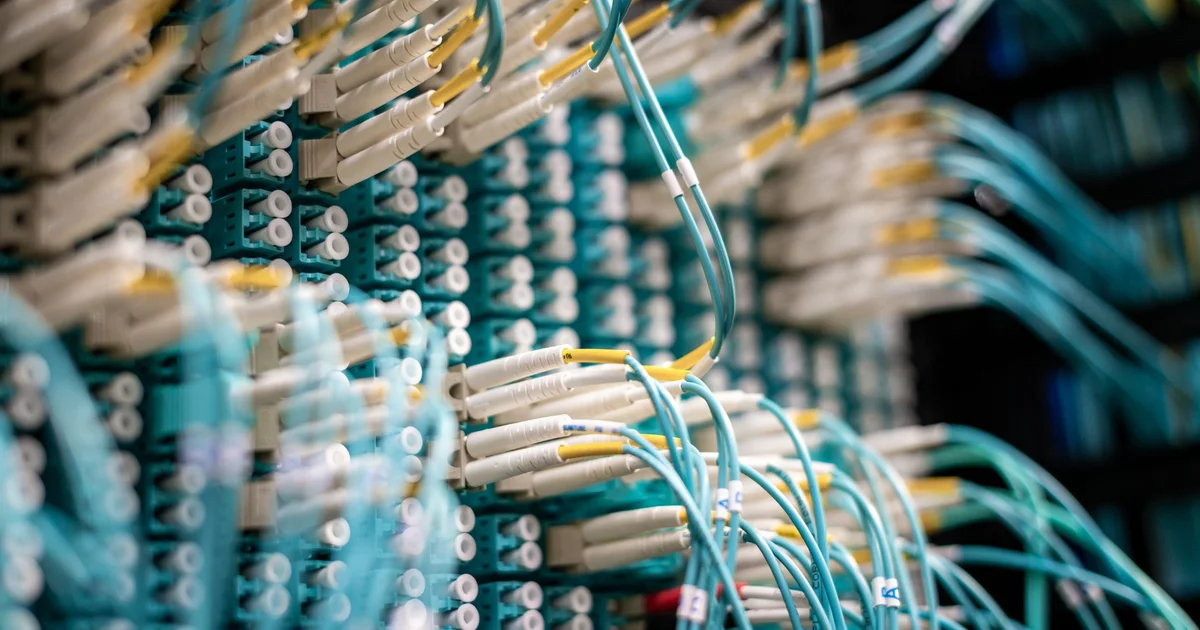
For a business in Manta or any city in Manabí, internet quality is not a luxury: it determines whether you can invoice online, use cloud systems, hold video calls, watch your premises through cameras or sell on social networks without outages. Fiber optics is today the most solid technology to achieve that, and more and more areas of Ecuador's coast can access it. This article does not report deployment figures: it explains what changes with fiber, how to evaluate an offer and what an SME in Manabí should keep in mind when contracting or improving its connectivity.
Why Fiber Makes the Difference
Fiber optics transmits information as pulses of light through glass strands. Compared with media such as radio links or copper, it generally offers:
- More available bandwidth, which can also be expanded without changing the cable.
- Greater stability, because it is less sensitive to electrical interference and weather.
- More balanced upload and download, key if you upload backups, stream video or work with the cloud.
- Lower latency, important for calls, online systems and remote control.
Residential or Business: They Are Not the Same
Many providers offer home fiber plans and business plans. The practical difference is usually in the service conditions, not just the speed:
- Response time to failures and support hours.
- Fixed public IP, needed if you publish a service or connect cameras and systems from outside.
- Contention ratio, that is, how many customers share the same channel. A dedicated link guarantees bandwidth; a shared one can degrade at peak hours.
- Contract and guarantees in writing (availability, compensation).
Always ask what is guaranteed and what is "up to" a speed. That word matters.
What to Do: How to Evaluate Your Connectivity in Five Steps
- Measure what you have today. Run speed tests at different times, over cable and not only Wi-Fi. Record upload, download and latency for a week.
- Calculate what you need. Count connected people, simultaneous video calls, surveillance cameras, cloud systems and backups. Upload is usually the bottleneck.
- Compare providers with the same questions: guaranteed speed, contention, fixed IP, response time, installation cost, contract term and what happens if it fails.
- Check the exact coverage of your address. City coverage does not mean the fiber reaches your premises.
- Think about redundancy. If your business cannot stop, a second link from another provider (or a mobile backup) with automatic failover prevents going without service.
Beyond Contracting: The Internal Network Counts
Also keep a record of your measurements: if the service falls below what was agreed, having dates and times makes your claim to the provider much stronger.
A good fiber link is of little use with a low-end router, a poorly distributed Wi-Fi network or old cabling. Many "slow internet" problems are inside the premises. Check the router, the cabling and the location of access points; in multi-floor premises or with many devices, a proper network design and structured cabling are worth it.
Common Mistakes
- Choosing only on price per megabit. A cheap plan with high contention and slow support can be expensive in lost hours.
- Not asking for a fixed IP and discovering later that you cannot reach your cameras or systems from outside.
- Connecting everything to a single link and router with no backup, and no backup power for outages.
- Mixing the guest network and the company network, which exposes your systems.
- Not documenting contracts and renewal dates.
When It Makes Sense and When It Doesn't
It makes sense to move to fiber when your operation depends on the internet (invoicing, cloud systems, cameras, online sales), when your current link drops or saturates, or when you need to upload information regularly. It does not make sense to switch just because it is trendy if your current link is stable and your use is light; in that case, the best move may be to optimize the internal network.
Questions to Ask the Provider Before Signing
- Is the speed guaranteed or "up to"? What is the minimum speed?
- What is the maximum repair time and how is a failure reported?
- Is the IP fixed? Does it have an extra cost?
- What happens if I want to cancel before the contract term ends?
- Can the speed be increased without changing the contract?
SimCodec and Connectivity on the Coast
At SimCodec we design business networks (cabling, Wi-Fi, segmentation and redundant links) and connectivity projects for companies and municipalities in Ecuador. Learn about our networking and structured cabling services. If you want to review your connectivity in Manta or another city, write to us.
What recent progress has fiber optic expansion made in Ecuador?
In 2026, more than 500 kilometers of new fiber optic cable have been laid in areas that previously only had microwave coverage, part of a 30% growth in digital infrastructure investment between 2024 and 2026.
What benefits does better fiber connectivity bring to businesses?
Companies with high-speed connectivity report a 20% increase in productivity and a greater ability to run real-time systems to compete in global markets.
What holds back the country's fiber optic expansion?
Insufficient public investment compared to neighboring countries, the rural-urban connectivity gap, and a shortage of infrastructure specialists.