
Nvidia's CEO Resigns: What the Official Statement Says and What Changes for Companies Using AI
On Thursday, November 12, 2026, Nvidia announced that Jensen Huang, its founder, resigned as chairman, chief executive officer and board member, effective immediately. This is stated in the announcement the company filed with the SEC (Form 8-K), which Nvidia also published as a press release on its investor site. The news matters to everyone who relies on Nvidia chips to train and run AI. For an SME using cloud AI, the practical question is what changes today. The short answer: almost nothing in your operation, but it is worth reviewing your dependence on a single vendor.
What the official announcement says
- Resignation: Huang steps down from all three roles (board chairman, CEO and director) effective immediately.
- Interim CEO: Colette Kress, until now executive vice president and chief financial officer, becomes interim CEO and remains CFO during the interim period.
- Board chair: Harvey C. Jones is named the first board chair in the company's history. He was CEO of Synopsys.
- Succession: the board will start a search for a permanent CEO and will consider internal and external candidates.
- Continuity: in the release, Jones says the board has "full confidence in Colette and the leadership team" and Kress that her focus remains on "serving our customers, partners, developers and shareholders."
- Quarterly results: the company kept its third-quarter fiscal 2027 results release scheduled for November 17.
The announcement gives no reason for the resignation and includes no financial figures.
The reason: there is no official one
Neither the 8-K nor Nvidia's press release explains why Huang resigned. We don't speculate at SimCodec: what matters to a customer company is the impact on product and supply, and the company itself will clarify that over time.
Why it matters to companies that don't even buy chips
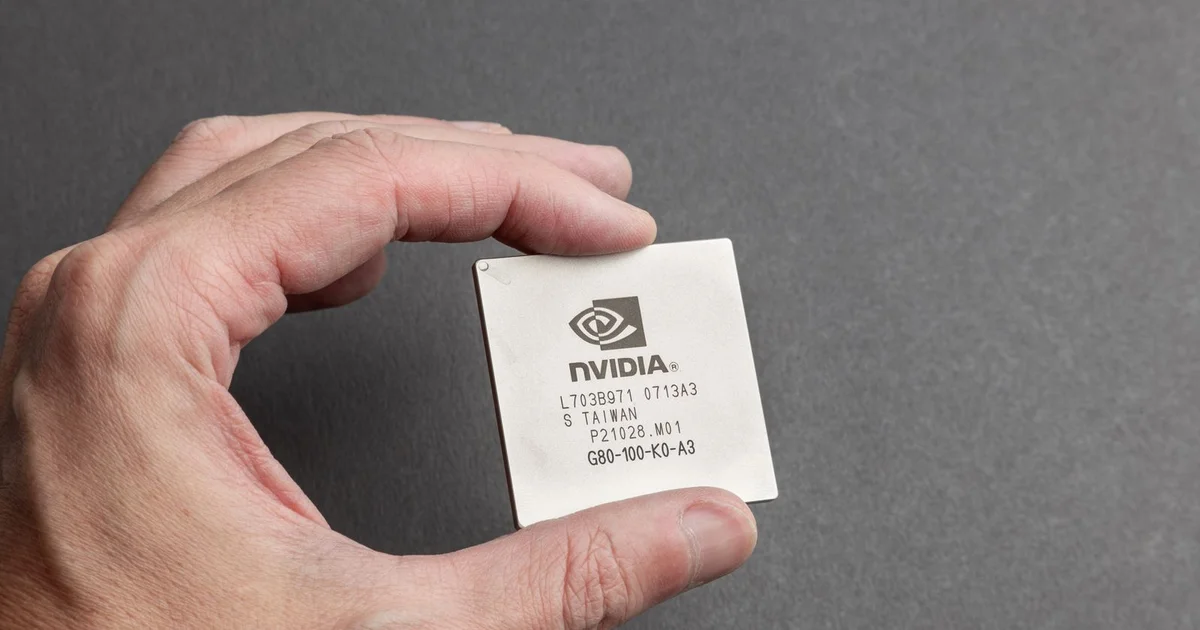
Nvidia makes the GPUs that much of today's AI runs on. Even if your company never buys one, the services you use depend on them: the models you query via API, accelerated cloud platforms and the tools you subscribe to. A leadership change at such a central supplier can alter product priorities, schedules or prices in the medium term, even though there are no concrete signs of that today.
What this means for your SME
- Don't change plans over a headline. A change at the top doesn't cancel contracts or switch off services. If you already use AI or cloud services, your service stays the same.
- Identify your concentration. Does your operation depend on a single model, a single cloud provider or a single hardware maker? Write it down.
- Avoid impulse purchases. If you were planning to buy GPU hardware, compare quotes and delivery times; don't rush or cancel over rumors.
- Follow official announcements. Nvidia is the one that will report on succession and the company's direction; avoid deciding based on rumors.
Update, November 18: quarterly results
According to the November 17 results release, Nvidia reported revenue of about USD 115.8 billion for the third quarter of fiscal 2027 (103% above a year earlier), of which USD 107.6 billion came from Data Center, and projected USD 130.0 billion (±3%) for the fourth quarter, assuming no Data Center compute revenue from China. The release quotes Colette Kress as interim CEO.
How to reduce dependence on one vendor
- Design with swappable layers. Have your application call a layer of your own rather than the model directly, so you can switch providers. We covered it in AI wrappers and real value.
- Compare models on your real cases, not on announcements. There is strong competition on price and quality today (see the model price war).
- Review contracts: terms, price changes, data portability and what happens if the provider changes conditions.
- Keep a documented plan B for your most critical AI-driven processes: what is done manually if the service fails.
How we approach it at SimCodec
At SimCodec we build AI solutions for companies with exactly this in mind: components that can be swapped without rebuilding the system and decisions based on tests with data from your operation. If you want to review how dependent your company is on a single AI or cloud provider, contact us.