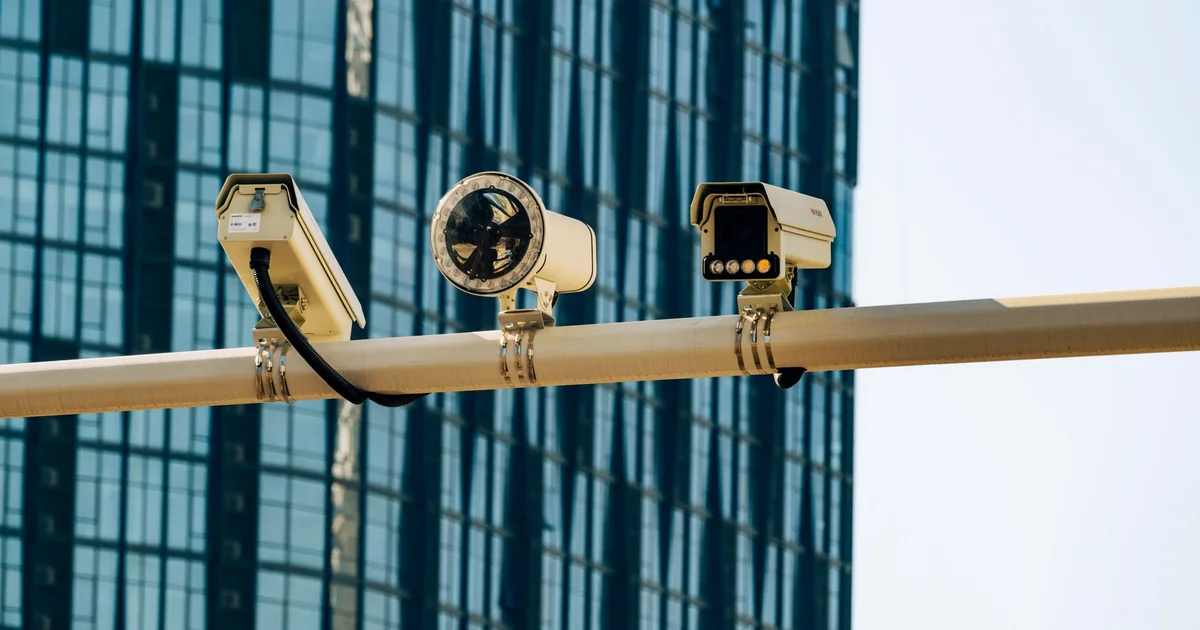
Smart cities: how Quito and Ecuador are advancing in connected security
Quito, at 2,850 meters above sea level, faces security challenges of its own: from mass events in the Historic Center to infrastructure surveillance across the valley. In that context, intelligent video surveillance has become very useful, but only when it is designed as security that respects privacy and not as technology for technology's sake.
The digital transformation Ecuador needs
Ecuador is digitalizing rapidly. Hospitals, universities, local governments and service companies need to see what happens in their facilities without compromising sensitive data. Today's cameras don't just record: they interpret what they see.
Real-time intelligent detection
- Spot intrusions without false alarms caused by shadows.
- Count foot traffic at events or stores without tracking individuals.
- Alert on unusual behavior in critical zones.
- Integrate with existing access control systems.
A scenario: mass events in Quito
Imagine coordinating security for a tech fair or a festival at Parque Bicentenario: hundreds of cameras, dozens of entrances and thousands of attendees. Surveillance based only on people watching screens is unworkable. Intelligent systems let operators concentrate on real anomalies and not on normal flows.
In educational institutions in Quito we have helped deploy systems that distinguish a student arriving late from unauthorized access. The goal is security without oppressive surveillance.
Privacy: the requirement that is not negotiable
In Ecuador, personal data protection is a right and is regulated by the Organic Law on Personal Data Protection (LOPDP). Images of people are personal data, so installing cameras is not prohibited, but it must be done with judgment. The Superintendency of Personal Data Protection (SPDP) ruled on video surveillance, in response to a query from public entities, and according to the summary by the law firm NMS it highlighted points that also serve as good practice for the private sector:
- Install cameras only where there is a real, concrete and verifiable risk, with a legitimate purpose defined in advance.
- Avoid areas with a high expectation of privacy, such as restrooms or changing rooms.
- Inform with visible signage: who is responsible for the processing and how to contact them.
- Define and document, with reasons, the retention period. The SPDP stated that there is no specific rule with uniform periods, so the period must be what is necessary and justifiable.
To this you add technical good practices: local storage or servers under your control, facial anonymization when identification is not needed, and a clear audit of who accesses what. Keep in mind that this ruling was addressed to public entities; if you are a private company, consult your legal advisor about what applies to you.
The cloud: an ally if implemented correctly
Storing all video on your own servers consumes power and space. Hybrid cloud solutions (local recording and cloud backup) offer access from anywhere without giving up control. Before choosing, ask where the data is stored, who has access and how long it is kept.
What to do: a responsible video surveillance project
- Define the risk and the goal. What you want to protect and from what: access points, merchandise, people, perimeter.
- Do a site walkthrough. Measure lighting, heights, angles and blind spots. Many failures are about placement, not about the camera.
- Size the network and storage. Resolution, frames per second and retention days determine the space needed.
- Document the policy. Who views the images, how long they are kept and how access requests are handled.
- Post signage in the monitored areas.
- Start with a pilot. Test the analytics in one zone and adjust before expanding.
- Train and review. Operators must know what to do when an alert fires, and the configuration is reviewed periodically.
Common mistakes
- Buying cameras without designing the system. More cameras don't mean more security.
- Underestimating the network. A poor switch or cabling causes outages and lost video.
- Keeping video indefinitely without a reason to justify it.
- Shared accounts and default passwords on recorders and cameras.
- Expecting AI to solve everything. Analytics reduces false alarms, but it needs a good image and tuning.
- Not considering local connectivity. In rural areas or with limited links, record locally and upload only what is necessary.
When it makes sense and when it doesn't
Intelligent video surveillance makes sense when you have many cameras for few operators, need to search video events quickly or want to count foot traffic without tracking people. In extensive perimeters or with high visitor flow, analytics is especially useful.
It isn't always needed. For a small premises with a few cameras, a well-installed traditional system may be enough. And technology does not replace access control, lighting or security procedures: it is one more layer.
How we approach it at SimCodec
We have installed intelligent video surveillance systems in educational institutions, hospitals and companies across Ecuador. We design considering geography (connectivity in rural areas is different), culture (sensitivity to excessive surveillance) and local regulation. From camera selection to security staff training, we support the entire process. Learn about our video surveillance service or contact us: you probably need intelligent video surveillance, not just cameras.
Sources
- NMS Law, Nuevo pronunciamiento de la SPDP sobre videovigilancia y protección de datos personales en Ecuador, January 12, 2026.
What makes modern video surveillance in Quito "intelligent"?
Today's cameras do not just record, they understand what they see: they spot intrusions without false alarms from shadows, count foot traffic at events or stores without tracking individuals, alert on unusual behavior in critical zones, and integrate with existing access control systems.
How is privacy protected when using intelligent video surveillance in Ecuador?
The right to privacy is in the Ecuadorian Constitution, so the right approach includes local storage or servers within the country, limited video retention (7 to 30 days depending on the case), facial anonymization when identification is not needed, and a clear audit of who accesses what.
What role does the cloud play in video surveillance for Ecuadorian institutions?
Hybrid cloud solutions, with local recording and cloud backup, offer access from anywhere without sacrificing privacy. In Ecuador, with servers in Latin America, data does not cross unnecessary borders.