The Energy Cost of AI: The Race for Data Centers, Chips and Power
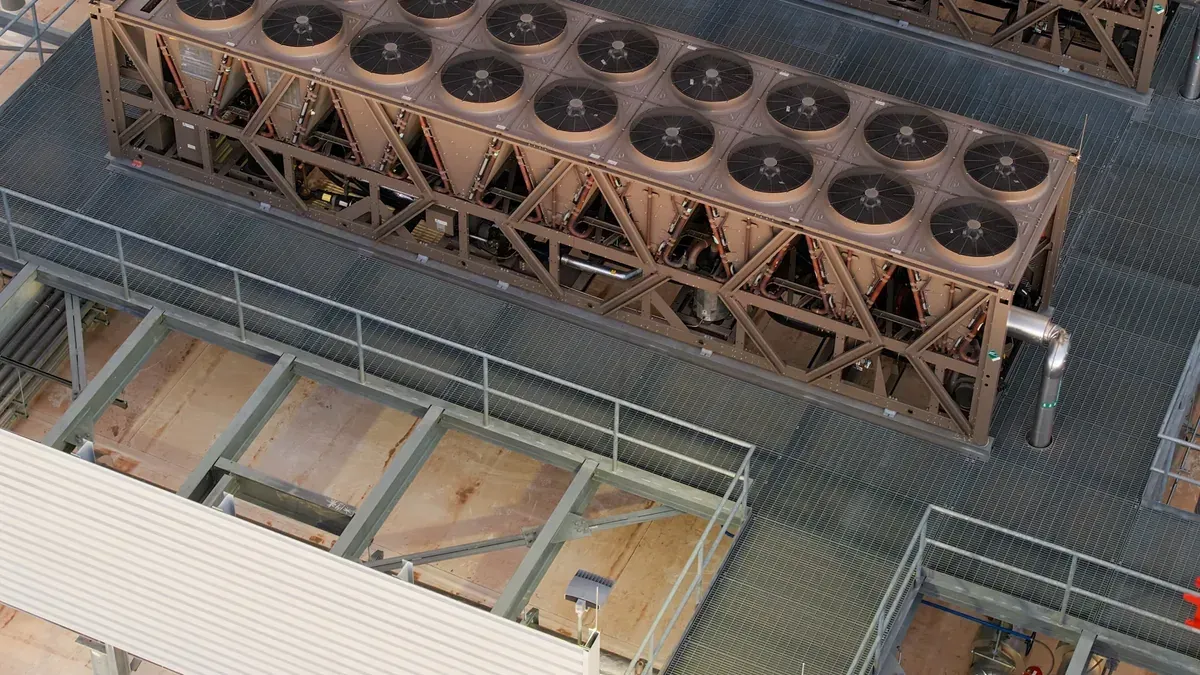
Behind every answer from an AI model there is electricity, a lot of it. In 2026 the technology conversation added a factor that once seemed secondary: energy. The International Energy Agency reported that data center electricity consumption grew strongly in 2025, and that AI-focused centers grew even faster, well above the growth of global electricity demand. For companies in the region, this is not a distant fact: it affects costs, availability and architecture decisions. The agency itself sums it up in its report on energy and AI: "there is no AI without energy", specifically electricity for data centers.
A Demand That Is Soaring
Industry projections point to data center electricity demand continuing to rise markedly toward the end of the decade, driven mostly by inference workloads: every query to a model consumes energy, and at massive scale the sum is enormous. High-density GPU clusters concentrate much of that appetite.
The Constraint Is No Longer Just the Chip
An important change in 2026 is that the bottleneck shifted from silicon to energy and infrastructure. It is reported that part of the planned data center capacity could be delayed by power-grid connection queues and construction limits. The question is no longer just how many chips, but how much power and where.
The Race for Efficiency
The good news is that efficiency is also advancing. Compute per watt has improved enormously over the years, and chips designed to offer a better price-performance ratio than traditional options are appearing. The challenge is that total consumption grows faster than efficiency gains: making each operation cheaper is not enough if many more operations are performed.
- More efficient hardware: new accelerators and optimized architectures.
- Smaller models: using the right model for each task instead of always the largest.
- Location and cooling: data center design that reduces the associated energy spend.
What It Means for Your Company
For a Latin American organization, the energy cost of AI translates into the price of cloud services and the environmental footprint of what it deploys. Two practical criteria help:
- Choose the right model, not the biggest. Many tasks are solved with compact models at a fraction of the cost and consumption.
- Measure usage. Optimizing queries and avoiding unnecessary compute reduces both the bill and the footprint.
What to Do: Five Concrete Actions
- Take an inventory of where you use AI. Built-in tools, APIs, coding assistants, chatbots. Many companies do not know how many AI services they pay for in total.
- Assign the model according to the task. Classifying, summarizing or answering frequent questions rarely requires the largest model.
- Reduce repetition. Cache answers to identical or very similar questions and avoid resending long documents with every query.
- Limit input and output length. Asking for short answers and sending only the necessary context reduces consumption and cost.
- Review your cloud bill periodically. If AI spending grows faster than the benefit, it is a signal to re-optimize.
Common Mistakes
- Always using the most powerful model "just in case".
- Not measuring. Without usage data you cannot tell a real improvement from a hunch.
- Leaving automated processes running unchecked, repeating AI calls without need.
- Confusing efficiency with guaranteed savings. If usage grows, total spending can rise even if each operation costs less.
- Assuming "the cloud" consumes no energy of its own. It is consumed elsewhere, and its cost reaches you through the rate.
When It Makes Sense and When It Doesn't
It makes sense to worry about efficiency when AI use is high or growing fast, when your cloud services bill is already significant, or when your customers ask for sustainability indicators. If your use is small, the priority is not to optimize each query but to avoid unnecessary loads and choose well from the design stage; it is not worth investing weeks in reducing a minimal expense.
How We Approach It at SimCodec
At SimCodec we design AI solutions thinking about efficiency too, not only capability. We help clients choose the right model for each case, avoid oversizing when a lighter option does the job, and optimize usage so that cloud spending stays under control. We understand that in the region every dollar of infrastructure counts, and that an efficient architecture is both cheaper and more sustainable. The goal is for AI to deliver value without becoming an energy cost nobody measured. Learn about our artificial intelligence service.
Do you know how much the AI you already use or plan to use consumes and costs? Measuring it is the first step so that efficiency works in your favor: let's talk.
Sources
- International Energy Agency, Energy and AI (report on the electricity demand of AI and data centers).
How much is AI driving up data center electricity demand?
The International Energy Agency reported that data-center electricity use surged in 2025, and that AI-focused facilities grew even faster, well outpacing the growth of global electricity demand overall.
Is the bottleneck for AI in 2026 the chips or the power supply?
A major shift in 2026 is that the bottleneck moved from silicon toward energy and infrastructure, with part of the planned data-center capacity reportedly at risk of delay due to grid interconnection queues and construction limits.
What can a company do to control the energy cost of the AI it uses?
Choosing the right model for each task instead of always the largest one, and measuring usage: optimizing queries and avoiding unnecessary compute reduces both the cloud bill and the environmental footprint.